
Creating Eye-Catching Etched Plates Design Tips and Tricks
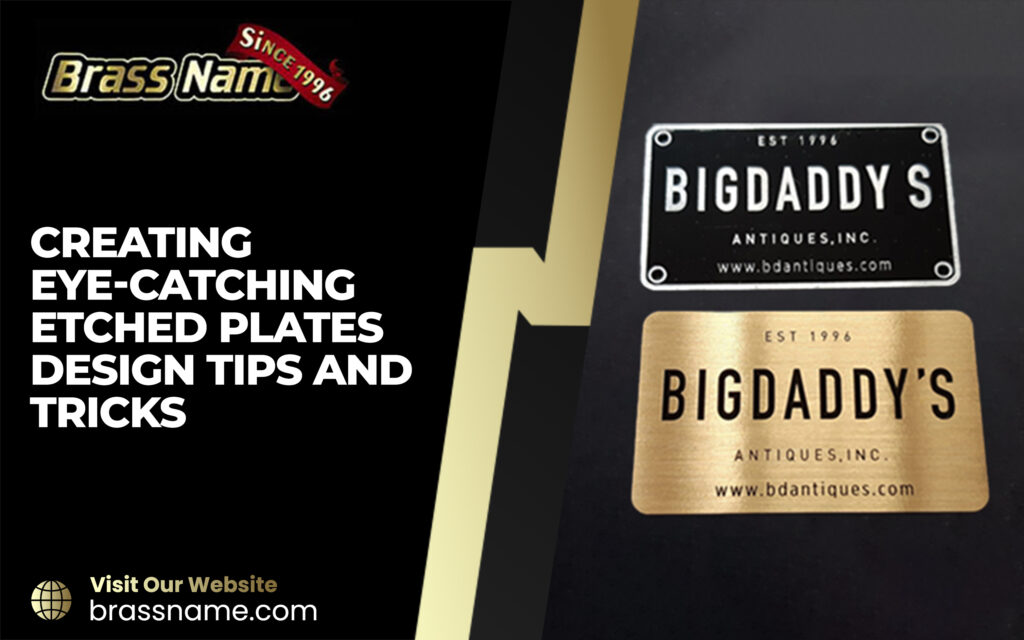
Etched plates are a stunning way to add a touch of personalization and artistic flair to your home decor, tableware, or even gifts. The process itself is surprisingly accessible, allowing you to transform ordinary plates into beautiful works of eye-catching metal art. But where do you begin? This blog is your one-stop guide to creating eye-catching etched plates! We’ll delve into everything you need to know, from brainstorming design ideas and choosing the perfect plate to exploring various etching techniques and discovering tricks to make your design truly shine. So, find out where to buy etching supplies, grab your creative spark, and get ready to transform those plain plates into masterpieces! What is Etching? Have you ever been captivated by the rich, velvety lines of an antique print? That subtle depth and detail is often the result of etching, an artistic technique with a fascinating history. Etching goes beyond simply creating a design; it’s about etching your mark onto a surface, literally and figuratively. At its core, etching is an intaglio printmaking process. Imagine a metal plate coated in a special acid-resistant barrier, like a protective shield. The artist then takes on the role of a sculptor, using a sharp tool to scratch away sections of this barrier, revealing the bare metal beneath. This exposed metal becomes the stage for the magic to happen. The metal plate is submerged in an acid bath, and just like a sculptor carving away at the stone, the acid meticulously eats away at the exposed metal, creating a network of incised lines and textures. The beauty of an etched plate design lies in the level of control the artist wields. The depth and width of these etched lines depend on the duration of the acid bath, allowing for a captivating range of tones and textures. Once the etching is complete, the plate transforms into a printing tool. Ink is pressed into the etched grooves, becoming deeply embedded within them. When the plate is pressed against damp paper, the ink transfers, leaving behind a mirror image of the etched design. The History of Etching The origins of etching can be traced back to the sixteenth century, but it wasn’t until the seventeenth century that it truly came into its own. Jacques Callot, a visionary printmaker, revolutionized the technique with his inventive tools and methods, paving the way for future artistic exploration. However, it was the mastery of artists like Rembrandt van Rijn that elevated etching to new heights. Rembrandt’s skill-full manipulation of light and shadow, coupled with his dynamic storytelling, established etching as a medium capable of profound expression. Throughout the centuries, etching continued to captivate artists across diverse genres and styles. From the satirical commentary of William Hogarth to the architectural marvels of Giovanni Battista Piranesi and the social critique of Francisco Goya, etching served as a versatile canvas for artistic innovation. Even in the modern era, luminaries like Pablo Picasso and Käthe Kollwitz embraced etching, infusing it with new perspectives and pushing its boundaries. Today, artists like Norman Ackroyd carry on this tradition, ensuring that etching remains a vibrant and enduring form of artistic expression. Different Types of Etching Etching isn’t a one-size-fits-all process. There are several techniques suited for different materials and artistic goals. Here’s a breakdown of some common etching types: Chemical Etching: This traditional method uses acid solutions to create designs on a surface. A protective resist is applied to the material, and the artist scratches away sections to expose areas for etching. The material is then submerged in an acid bath, which eats away at the exposed areas, creating a permanently etched design. Chemical etching works well on glass, metal, and even some plastics. Electrolytic Etching: This method utilizes electricity to achieve similar results to chemical etching. The material is submerged in an electrolyte solution, and an electrical current is passed through it. The exposed areas react with the electrolyte, creating the etched design. Electrolytic etching offers more precise control over the etching depth compared to chemical etching, making it ideal for intricate details. It’s commonly used for glass and metal. Dry Etching: Unlike the previous methods that use liquid solutions, dry etching employs a gas plasma to remove material. A stencil or mask is used to define the desired pattern on the surface. The material is then bombarded with ions in a vacuum chamber, etching away at the exposed areas. This method offers excellent precision and is often used in microfabrication for creating circuits on silicon wafers. Laser Etching: This modern technique uses a focused laser beam to vaporize material from the surface, creating a permanently etched design. It offers exceptional control and detail but requires specialized equipment and can be more expensive compared to other methods. Laser etching is versatile and can be used on various materials like metal, glass, plastic, and even wood. These are just some of the most common etching techniques. The choice of method depends on the desired outcome, material, and budget. Each technique offers unique advantages and limitations, allowing artists and manufacturers to create a vast array of etched designs. Decorative Etching Techniques Etching goes beyond simple lines; it’s a canvas for artistic expression. Here are some decorative techniques to elevate your etched plates: Geometric Patterns: Embrace the precision of geometric designs. Use stencils for clean lines and shapes, or create freehand patterns using rulers and etching tools. Play with scale and repetition for a modern and captivating look. Nature’s Inspiration: The natural world is brimming with etching inspiration. Capture the delicate veins of leaves, the graceful curves of flowers, or the majestic silhouette of animals. These organic forms add a touch of elegance and beauty to your plates. Mandalas & Zentangle Art: For a touch of meditative intricacy, explore the world of mandalas and Zentangle art. These techniques involve creating intricate patterns using repetitive shapes and lines. They’re perfect for adding depth and detail to your etched designs. Textured Effects: Don’t limit yourself to smooth lines! Experiment with textured effects
Etched Plates vs. Engraved Plates: Understanding the Differences
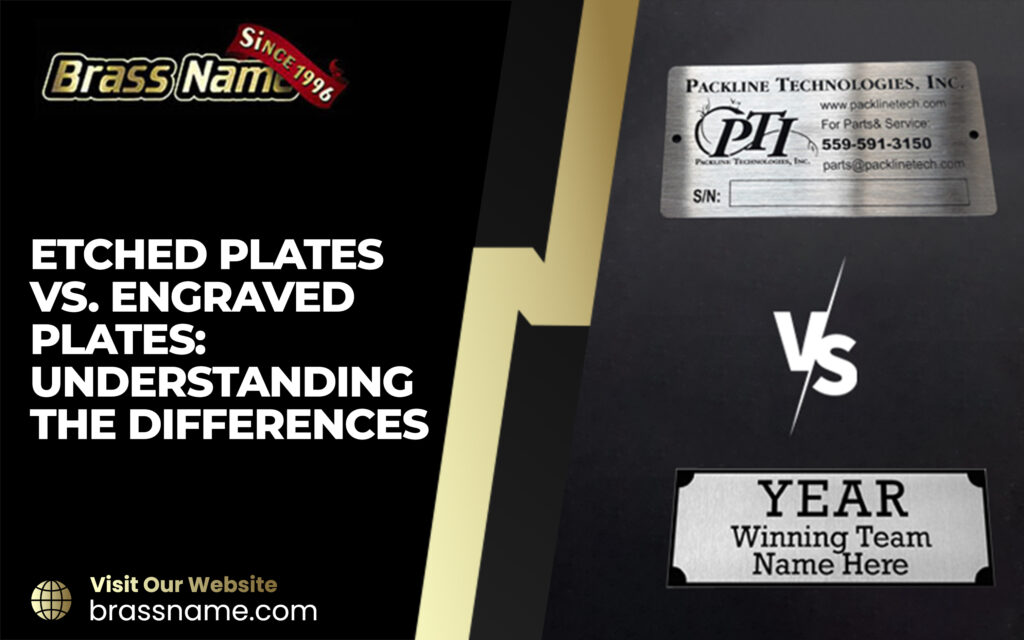
Choosing the right nameplate involves considering various elements, from its dimensions to the method of marking. Among the plethora of options available, etched and engraved nameplates stand out as top contenders. Although these two share similarities, their manufacturing processes diverge significantly. Understanding these disparities is crucial in making an informed decision about which type of nameplate best suits your needs. At Brass Name, we pride ourselves on guiding you through the selection process, helping you discern whether an etched or engraved nameplate is the optimal choice for your requirements. Here, we go out of our way to ensure a seamless and satisfactory experience with your custom nameplate. In this blog, we dive into the intricate details of etched and engraved plates, examining their differences in manufacturing processes, appearance, durability, and suitability for various applications. Armed with this knowledge, you’ll be empowered to make the right choice for your specific needs. What Is Engraving? Engraving, whether on wood blocks or metal plates, embodies a meticulous artistry where images are carefully carved to create stunning impressions. In woodblock engraving, artists intricately carve designs into wooden surfaces, applying ink to the raised areas for printing. Conversely, metal plate engraving utilizes the intaglio technique, incising designs into metal surfaces, with ink settling into recessed grooves for transfer onto paper. Each method offers distinct visual appeal, with wood engravings boasting a white-on-black aesthetic and metal plate engravings renowned for intricate detail. Both techniques exemplify timeless craftsmanship, inviting viewers to appreciate the artistry and precision behind each print. What Is Etching? Etching, rooted in tradition, involves the meticulous incision of designs into metal surfaces using acids or mordants, a process that has evolved with modern chemical applications. Its historical significance persists in printmaking, complementing engraving as a cherished technique in old master prints. Beyond its artistic heritage, etching plays a crucial role in contemporary technologies, contributing to the production of circuit boards and microfabrication processes. This enduring craft bridges the gap between tradition and innovation, leaving an indelible mark on both artistic expression and technological advancement. Etched vs. Engraved Plates Despite yielding similar final products, etching and engraving differ significantly in their technical processes and results. Laser engraving, for example, operates by creating a hollow within a material’s surface, resulting in an image or message that’s both visible and tactile. In contrast, laser etching removes the top layer of material, akin to a gentle erosion, without causing structural damage. Some major considerations to make while differentiating the two include: Variety in Aesthetic and Design Options Whether opting for etched or engraved nameplates, the breadth of design possibilities allows for the incorporation of logos, graphics, or text. Etched nameplates feature smooth, evenly engraved grooves, ideal for showcasing intricate patterns and fine details. In contrast, engraved nameplates possess distinctive textural qualities, characterized by deep etching that adds depth and texture to the finished artwork. Selection of Materials Nameplates, whether etched or engraved, are commonly crafted from a diverse array of materials, including metals like aluminum, stainless steel, and brass, as well as plastics such as acrylic and PVC. The choice of material for a nameplate hinge on considerations such as strength, aesthetics, and environmental conditions. Durability of Etched vs Engraved Plates: Both etched and engraved metal nameplates are engineered to withstand wear and tear, including abrasion and corrosion. However, their long-term performance may vary depending on factors such as exposure to harsh environments, frequency of use, and maintenance practices. Cost Comparison: Etching vs. Engraving: When it comes to choosing between metal etching vs engraving, cost considerations can play a significant role in your decision-making process. Several key factors influence the cost disparity between these two techniques, each impacting the overall expense of your project. Material: Hard materials like stainless steel or titanium pose more challenges for engraving, driving up the cost due to increased labour and time requirements. In such cases, we typically lean towards recommending chemical etching, which offers a more cost-effective solution without compromising on quality. Character Size and Depth: The intricacy of your design, especially when it comes to text or fine details, directly affects the complexity of the etching or engraving process. Naturally, the more intricate the design, the higher the cost, as it demands greater precision and attention to detail. Production Volume: For small-scale projects requiring only a few labels or nameplates, engraving may sometimes be the more economical choice. However, for larger volume orders, etching often proves to be the more cost-effective option, thanks to its efficiency and scalability. At Brass Name, we believe in transparency when it comes to pricing, ensuring that you have a clear understanding of the cost implications before proceeding with your project. For instance, if you’re eyeing a stainless-steel label with small text, we’ll steer you toward chemical etching for its ability to deliver the same high-quality results in less time and at a lower price point. Considerations Tailored to Your Application Your product’s specific requirements can play a pivotal role in determining whether etched or engraved nameplates are the optimal choice. Applications for etched plates often excel in industrial settings where durability and readability are paramount, whereas applications for engraved plates prioritize originality and individuality. Environmental Responsibility and Sustainability Increasingly, environmental impact and sustainability considerations weigh heavily on decision-making processes. Both etched and engraved nameplates can be manufactured using eco-friendly materials and processes, making them environmentally friendly alternatives. By carefully evaluating these factors and leveraging our expertise, we can help you make informed decisions that not only meet your budgetary constraints but also exceed your expectations in terms of quality and craftsmanship. Depth of Etching vs Engraving: Evaluating the Pros & Cons While etching offers precision and subtlety in surface modification, engraving excels in creating deeper, more tactile impressions. Evaluating the pros and cons of each method provides valuable insights for choosing the optimal approach based on project requirements and desired outcomes. Engraved Plate Pros and Cons When considering incorporating engraving into your project, it’s essential to weigh both its advantages and limitations. Let’s explore
What Are Etched Nameplates?
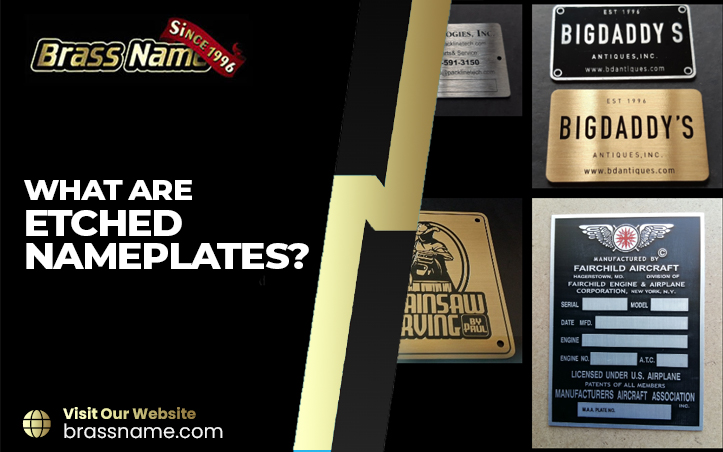
Etched nameplates are custom metal plates typically made from brass, aluminum, or St. steel featuring recessed or raised designs, text, or logos. This process involves selectively removing material to create raised or recessed designs, resulting in a permanent, high-quality finish. Materials Used in Etched Nameplates Metal: Metallic nameplates offer unparalleled durability and a classic aesthetic. Typical metals used for etched nameplates include stainless steel, aluminum, and brass. Advantages of Etched Nameplates Durability for the lower price Etched nameplates resist fading, scratching, and corrosion, ensuring longevity even in challenging environments Customization Options Intricate designs and precise detailing can be achieved with etching techniques, allowing for unique branding opportunities, multiple customization, and serialization along with barcode capabilities Professional Appearance Etched nameplates include professionalism and attention to detail, making them ideal for showcasing brand identity and enhancing product aesthetics. Applications of Etched Nameplates Etched nameplates find extensive use in various industries and settings: Industrial Equipment: Labeling machinery, control panels, and components. Identification Tags: Utilized for asset tagging, serial numbering, and safety labels and tags. Etching Techniques Two primary etching techniques are commonly used: Chemical Etching: Involves using acids or etchants to selectively remove material from the surface, leaving behind the desired design. Laser Etching: Utilizes a laser beam to vaporize or melt the material, creating precise, permanent markings. Factors Affecting Cost: Material choice, size, thickness, quantity, and type of finishes ordered nameplates influence pricing more than design. We can provide a price in most cases just according to the chosen material, size & thickness, and quantity. Fine tunes in the quotation process are based on design/production requirements and the type of plating or finish. Types of attachments – like types of screws, pins, or adhesives are also important to finalize quotation for the project. Conclusion Etched nameplates offer a durable, customizable solution across industries for branding and identification needs. With various materials, design options, and etching techniques, businesses can create distinctive nameplates that enhance their identity leave a lasting impression, and provide lasting durability for a lower price. FAQs (Frequently Asked Questions) Are etched nameplates suitable for outdoor use? Yes! Etched Brass and Aluminum especially stainless steel are suitable for outdoor applications. Can I order custom shapes for my nameplates? We can provide custom shapes for the same price as rectangular or oval plates of the same overall size to suit your specific design requirements. How long do etched nameplates typically last? Etched nameplates can last decades without losing quality or appearance. Are there any restrictions on the size of etched nameplates? While there may be size limitations depending on the material, and thickness we can accommodate a wide range of sizes. Can etched nameplates be used for serialized numbering? Etching allows for precise numbering and serialization and for barcode or QR code etching making it suitable for asset tagging and identification. GET A QUOTE ON ETCHED NAMEPLATES

